Business, Accounting and Financial Studies

Aims

  • To provide students at senior secondary level with fundamental business knowledge and skills, and develop their positive values and attitudes, so that they can fulfil their roles competently and confidently as consumers, investors, employees and/or entrepreneurs;
  • To develop students’ generic skills in research, analysis, leadership, team-building, communication, critical thinking, creativity, and problem-solving and transfer them to different domains; and
  • To explore different aspects of business to prepare students for life, for learning and for employment.

Major Concerns

  • To deepen and sustain academic excellence.

Activities

S.5 & S.6 BAFS Students Visit IFEC FinEd Hub

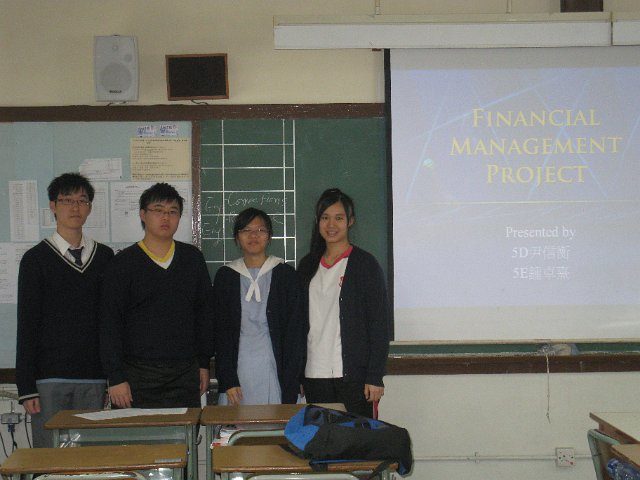
S.5 – Powerpoint Design and Presentation

S.4 – Quiz Competition

Subject Techer
teacher_M

Wong Yau Wai

(Panel Head)
Overview of the Learning Elements of the Curriculum Framework
COMPULSORY PART
Business
Environment
Introduction to
Management
Introduction to
Accounting
Basics of Personal
Financial
Management
  • Hong Kong Business Environment
  • Forms of Business Ownership
  • Business Ethics
    and Social Responsibilities
  • Management Functions
  • Effective Management
  • Key Business Functions
  • Entrepreneurship and small and Medium Enterprises (SMEs)
  • Business Communication
  • Purposes and the Changing Role of Accounting
  • Uses of Financial
  • Accounting Principles
    and Conventions
  • the Accounting Cycle
  • Basic Ratio Analysis
  • Fundamentals of
    Financial
    Management
  • Personal Financial Management
ELECTIVE
PART
Accounting Module
Financial
Accounting
Cost Accounting
  • Purposes and Role of Accounting
  • Double entry system
  • Books of Original Entry and Types of Ledgers
  • Trial balance
  • Period-end Adjustments Relating to the Preparation of Financial Statements
  • Financial Reporting for Different Forms of Business Ownership
  • Control System
  • Incomplete Records
  • Accounting Assumptions, Principles and Conventions
  • Financial Analysis
  • Cost Classifications, Concepts and Terminology
  • Marginal and Absorption Costing
  • Cost Accounting for Decision-making